Adaptation of municipalities to climate change
Adaptation is needed to meet the challenges that the consequences of climate change bring. The consequences are growing, and it is therefore important that adaptation is a focus for the state and municipalities.
Scientific Committee on Climate Change, 2023
Adaptation in municipal planning
Planning is one of the key governance tools for working successfully on the adaptation of settlements and society and for increasing resilience to the impacts of climate change.
With well-founded planning, it is possible to ensure that measures are taken to respond to expected consequences of climate change and that decisions take known natural hazards into account. This can be done, among other things, by:
Adapting the location and design of settlements and land use to expected events and changes, ensuring that development takes place in safe areas and that decisions on the location and design of infrastructure make it resilient, including to increased weather stress and risk.
- Reintroducing green infrastructure, such as blue-green stormwater solutions, alongside robust technical solutions, among other things to cope with increased precipitation intensity and weather stress.
- Integrating adaptation measures with other objectives and priorities to achieve multiple benefits. Mitigation and adaptation measures should also be integrated so that they support each other. This can be done by choosing adaptation measures that at the same time aim at:
- Protecting nature, vulnerable areas and biodiversity, for example by introducing nature-based solutions and green infrastructure that help bind greenhouse gases and reduce the impacts of increased precipitation intensity and floods.
- Carbon neutrality and improved public health. A high-quality, safe and attractive built environment, policies on settlement patterns, density and mixed-use development, a coherent streetscape, green areas and natural infrastructure, together with local services, shorter travel distances and good conditions for diverse and active travel modes can at the same time contribute to reduced emissions from transport, increased binding of greenhouse gases, a healthier environment and healthier lifestyles.
In the National Planning Policy (landsskipulagsstefna), the state sets out its joint policy on planning matters nationwide and provides general guidance for municipal planning and other land use and development planning. One of the topics of the current National Planning Policy is response to climate change, which emphasises that planning should include a policy on adaptation to climate change that supports the resilience of the relevant community in the long term.
The recommendations of the policy that are directed at municipalities concern, among other things, addressing challenges, assessing risk and taking the impacts of climate change into account, and seeking to reduce the load from them and/or prevent resulting risk through appropriate planning provisions. They can, for example, include limits on development and land use or the use of solutions, such as self-sustaining stormwater solutions, to mitigate and cope with these impacts on the built environment.
Tools for adaptation
From challenges to actions – a guide for municipalities
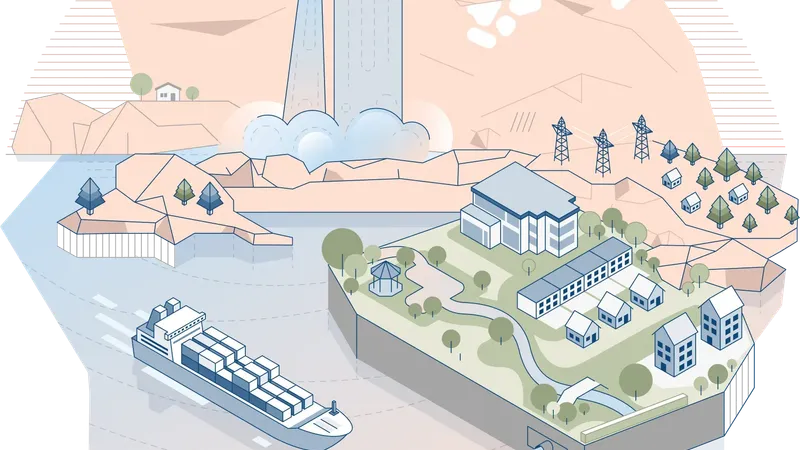
A practical and accessible guide for municipalities on adaptation to the impacts of climate change. In the guide, representatives of municipalities go step by step through the municipality’s vulnerability and risk assessment due to climate change and the development and prioritisation of adaptation measures based on it. The guide proposes approaches that build on consultation with residents and stakeholders.
Iceland’s Climate Atlas
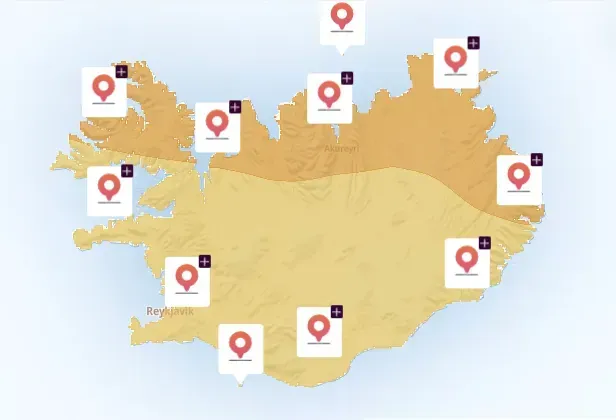
A map viewer that shows graphically what can be expected regarding changes in temperature, precipitation and sea level in the future under different scenarios for greenhouse gas emissions. Information from the Atlas can be used in planning and in analysing the vulnerability and risk of individual areas or sectors…
Examples of municipal adaptation
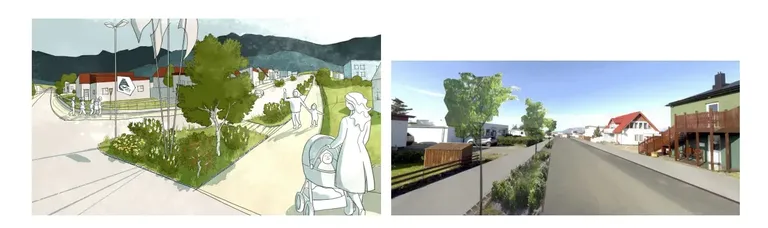
Green and healthy Grundarfjörður
Because of changes in climate, expansion of settlement and changed consumption habits, the increased volume of stormwater has become a significant challenge in Grundarfjörður, and the sewage system does not cope with the load, with the problems that follow. In 2019 the municipality set out a policy on nature-based solutions in sewage management within the urban area, among other things to increase the town’s resilience to climate change. Work is now under way on part of the master plan for blue-green stormwater solutions, and at the same time implementation has begun of blue-green stormwater solutions around the town.